Open Source Scores
These scores are crafted to incubate ensemble practice within formal coLabs,
and also generate ensemble practice in groups of people curious about becoming a formal coLab!
To have a score delivered to your inbox each month, be sure to subscribe to our Newsletter.
September 2026 Score
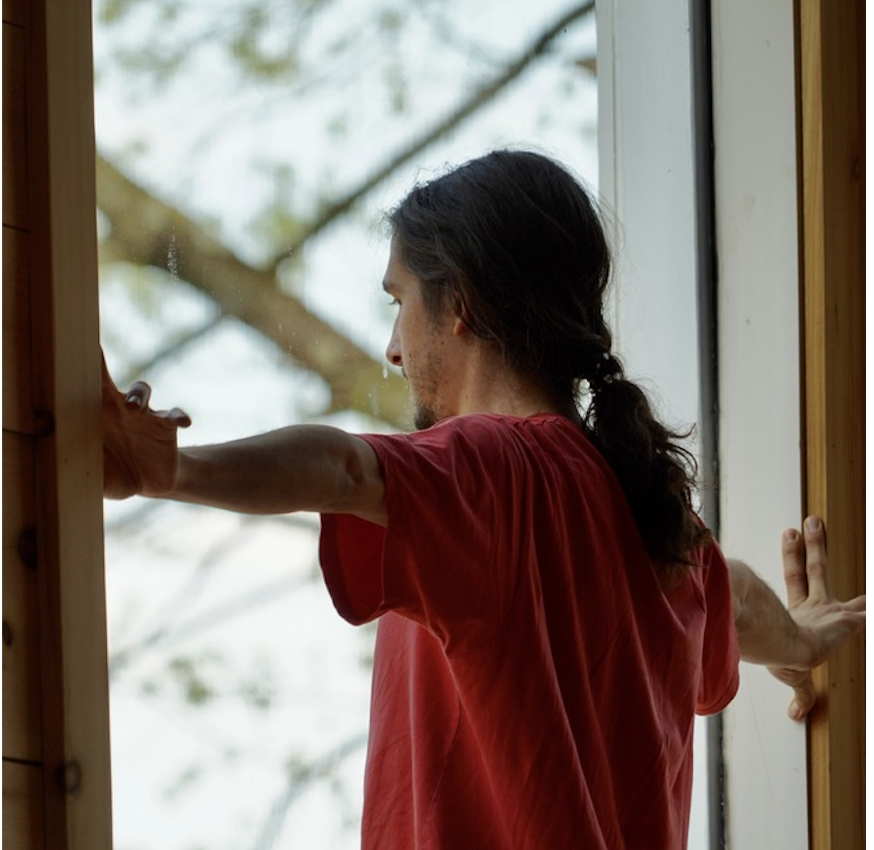
Objects of Being
Allow yourself to come into a state of deep relaxation while standing. Sharpen your mental acuity so that you are wide awake and can experience a broad distinction between the deep rest and organized balance of your physical form which is simultaneously beginning to move.
As you find this balance, notice sensations and your ability to recognize the experience of parts of your body on very different scales of being. As you meet each moment, bring a “hello” to anything you can identify as an object of being: body parts, thoughts, sensations. Some experiences may be so "between this and that" that they are difficult to recognize as a thing. Allow these experiences to hang in suspension. Notice that the thoughts about these experiences may themselves be objects of being, actions of the mind. Become comfortable with these objects coming and going. Allow your "Hello" to have a physical aspect, the motion of dancing. Yet, notice that your movement is an act of recognition.
Begin to move in the space of the room, allowing yourself to say “hello” in movement even to actions that you engage in, or that a partner may engage in. As you move, recognize spatial figures and the presence of things that move you. “Hello.”
Whether recognizing something actually material, concrete and touchable like the floor, a wall, a partner, a body part, a flower, a dance action, a phrase or something simply ephemeral like
a gust of wind, a feeling, a fleeting memory doesn’t matter. Say “Hello” to all!
Seek to change the scale of your experience, so that you are able to notice the scale of the contextual, the environmental, or the very very large, the universal. Then change the scale and also notice the very very small what is within, the soil, a splinter of wood, your cellular body. “Hello”.
Finally, notice the attention that is noticing – attention to attention. “Hello”. Return to notice objects you have previously noticed and notice the attentional presence that is noticing so that as you move, as your “hello’s” open up into movement, the one who is attending is relationally present, acknowledged, and acknowledging.
August 2026 Score

If standing in the supermarket line is uncomfortable, you step back (or forward) so that you don’t feel the tactile draw that is the disturbance of the presence of others causing you to extend their way. They take a step closer to you and you feel pressed. The social space has physical repercussions you may not wish to engage.
Begin by taking stock of where you have chosen to be in space: with what proximity to other objects (walls, furnitures, flies, humans, spirits), and in what relations with those human, non-human and more than human elements.
Then, minimize your physical space - draw nearer. Draw "too" near. Draw nearer still. Examine the ways your presence is disturbing what you are in relationship with.
Repeat with a new human, non-human or more than human element.
Then, draw closer, attentionally - which also touches - whether or not you use your physical bodily form to touch. Attend intensely. Attend lightly. Notice the quality of the attention with which you are touching. Do you use your eyes? your face? Do you need to?
In what ways can you notice or perceive the experience of the people, objects or elements you are in relations with? Can you allow them to also draw nearer to you? Can you feel the touch of their attention?
Enminding & Physical Space Exploration
July 2026 Score
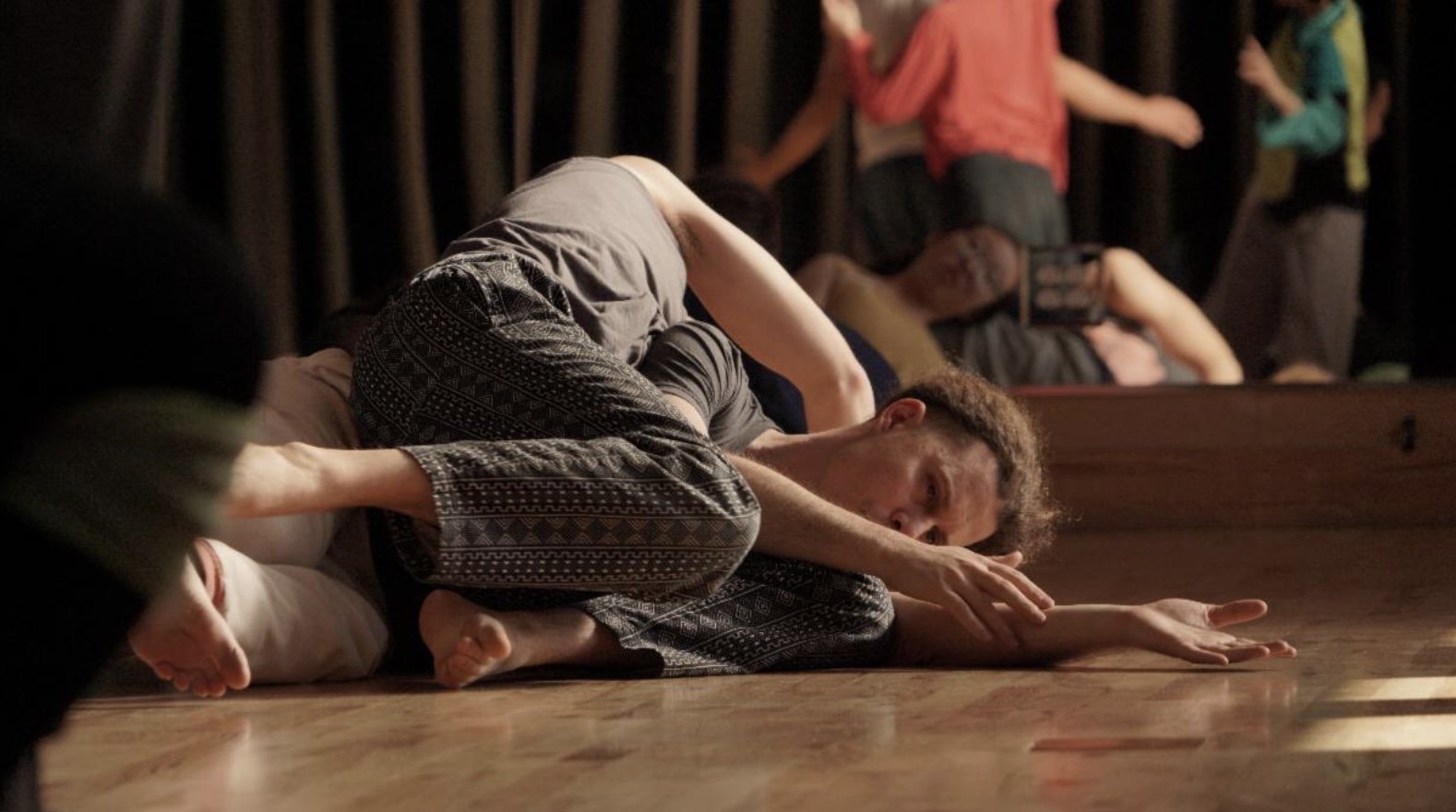
Diving into the Singular Self
Begin off of the dance floor. Just standing. Ask the question “What is me and how do I know?”
Explanation: Feel into your physical form, identify a sense of “this is me.” If it helps to return to the sense of being an infant awakening to their own form then let that be part of this sensibility. Notice that sense of looking out of your own eyes, hearing with your own ears, feeling present with your own flesh, the feeling of weight, the fullness of organs and viscera. Inward seeking in sensation. The question “What is me, and how do I know?”
Notice that in asking that question you move both inwardly and outwardly. Begin to move. Keep returning your attention to your individual Self and the sensational awareness of You.
Notice the “draw” of the world as your attention is called to experience that which is “not you”. Keep returning to the sensation of Self sensing the world. Attention moving inwardly, moving outwardly.
Attempt to establish a location from which you identify that inward or outward action. Get to know the void of the unlocatable you. Get to know the sense of “absence” of a place to arrive that is you both moving outwardly, and moving inwardly.
As you move more, your interface with the world becomes more pressing. Stay in touch with your “void, the one from which you experience outwardly, the one you seek to know by peering inwardly. As you move, return to this place of the unknowable you, while also sensing all of the variations of sensing that is your physical being in motion. Notice that the unknowable you is always present, ready to deepen your attentional being. You are vital and alive, feeling called to be present.
Allow a dance to unfold: Awakening the Self that is always locatable and unlocatable, finable and not. Inward moving, outward moving.
June 2026 Score
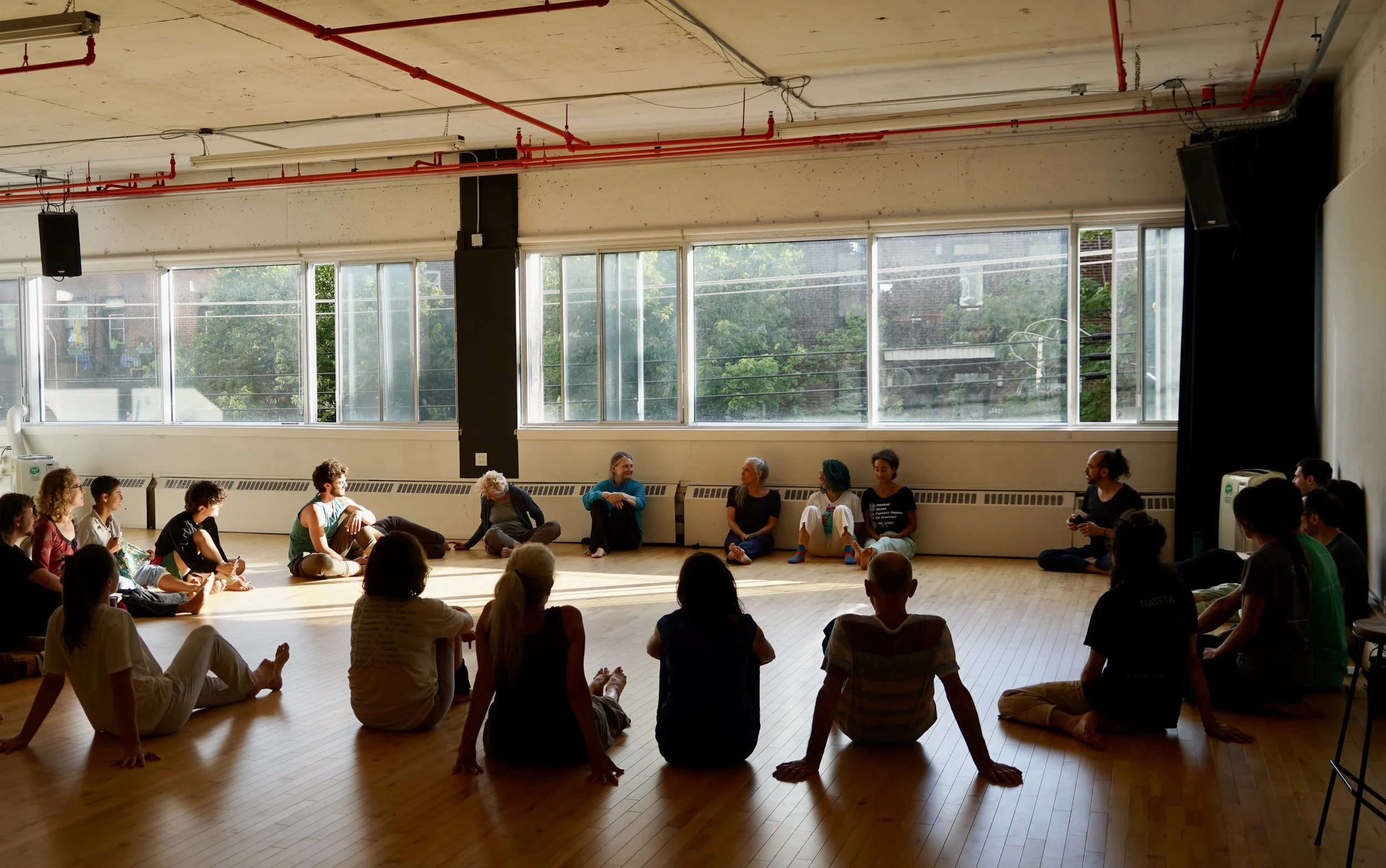
This score focuses on attending to the relationship with the environment around you, whether that's other living beings, the non-human or more than human.
Feel and invite the presence of what's around you, allowing your attention to touch. Presence itself, is a disturbance. Attend to your environmental disturbance, both internally and externally. Notice the change.
Next, allow the attention of your environment to touch you. Notice the way attention changes you.
Last, allow yourself to oscillate between self, and "we" - a both singular and multiple spatial being.
Relational Invitation
May 2026 Score
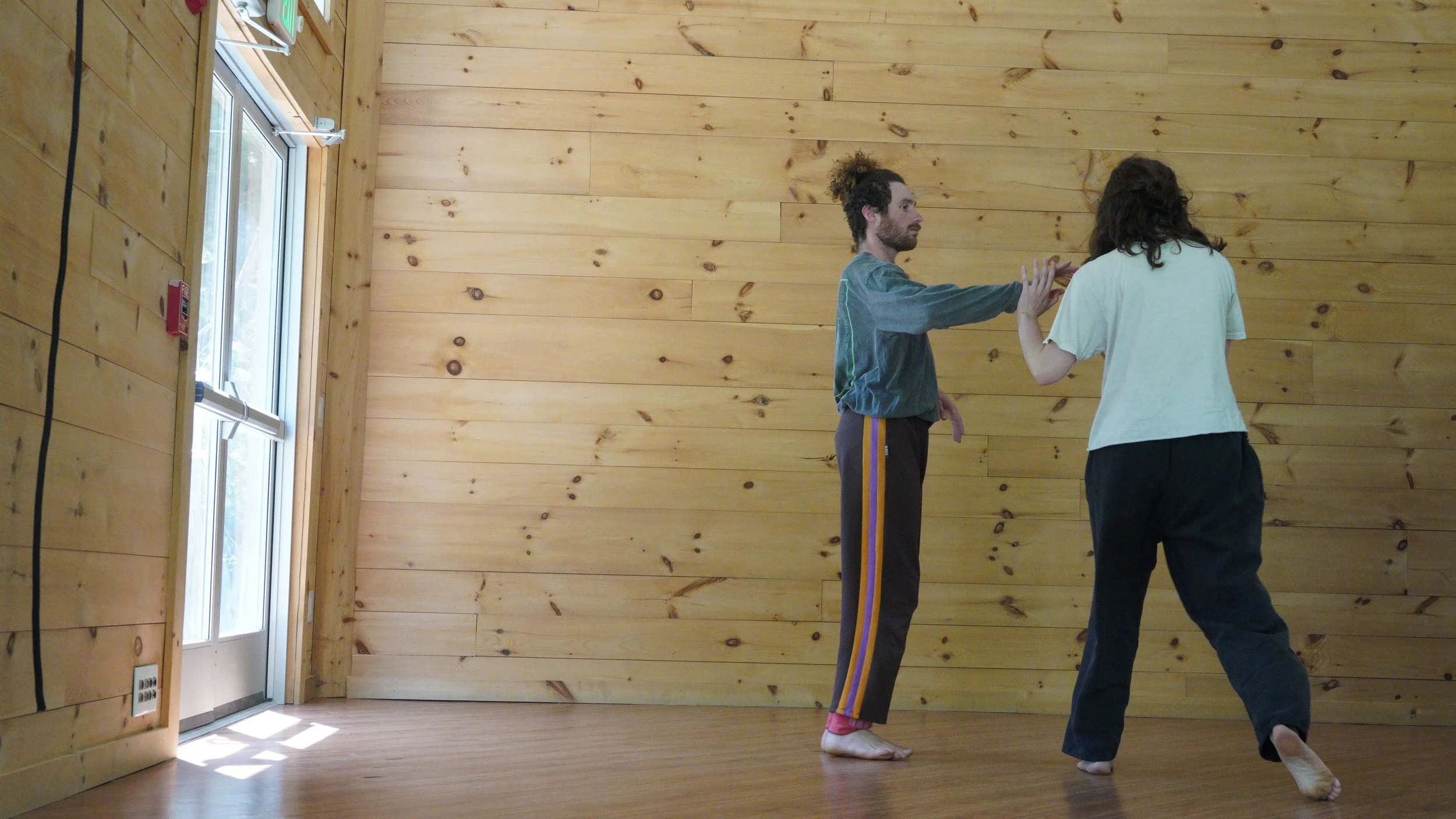
Notice how you shape your presence, “the self” and how you configure knowing the “other.”
Then, imagine moving without moving the body. Discover the smallest possible imagined internal action of moving. Get to know the imagination that forms embodied relations.
Next, Imagine Differently. You are a universe unto yourself. Extend your perceptual self to the wall, person, room, house, tree beside or beyond you.
Get as engaged in this imagined state as possible. Notice what happens to your physical experience. Notice, how, in order to do this task, your imagination has to frame a “self” that complies with this state. Notice the imagination is present always, shaping, acting, and even attempting to act.
Notice that how you imagine yourself to be, in relations or not, shapes what you feel, what you experience.
Last, open your movement until you are dancing, moving at the speed of your attention. Notice what you bring to your relations via your imagining. No words are necessary.
Shaping our Embodiment
April 2026 Score
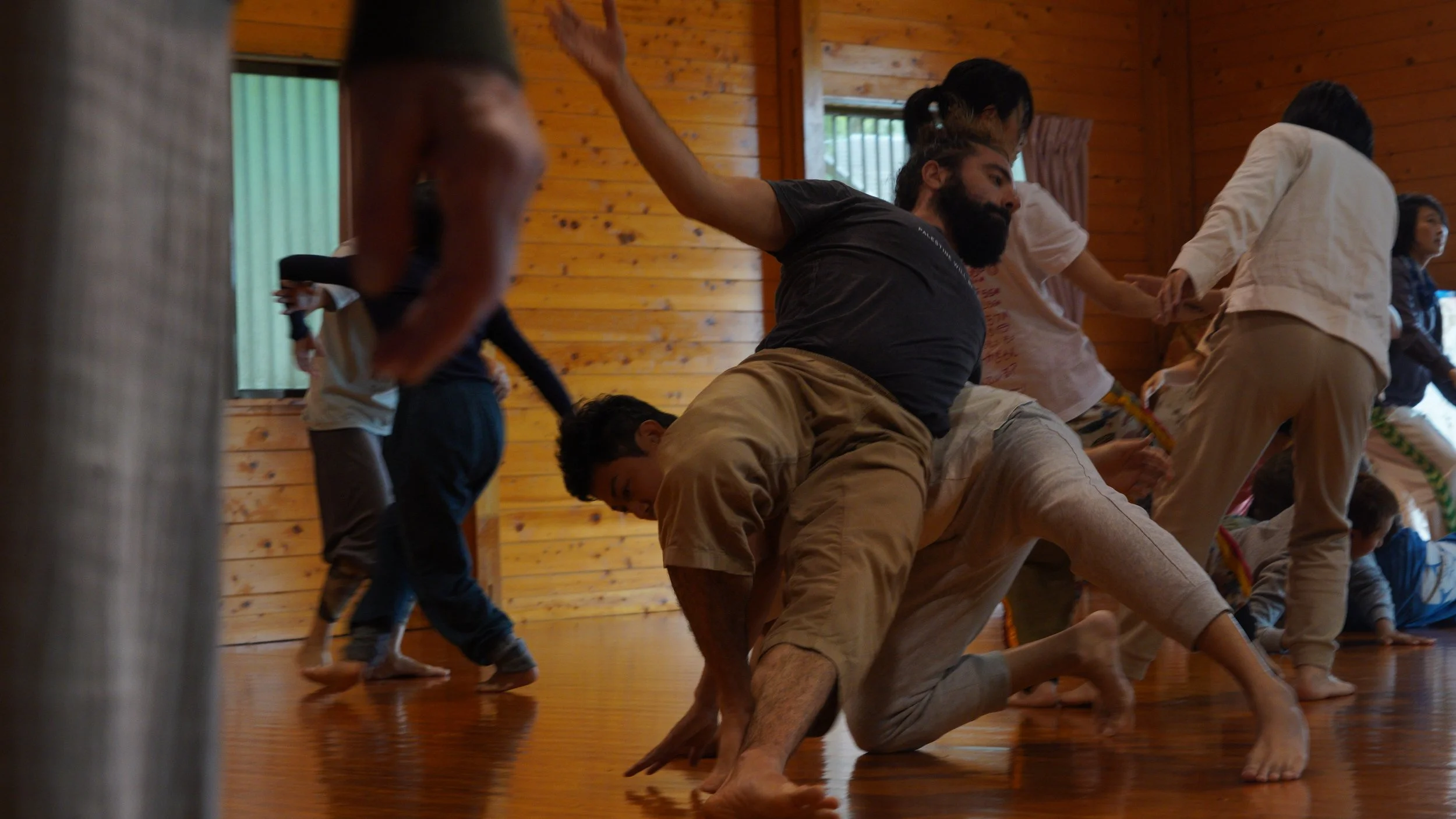
In a state of inquiry, become aware of the presence of people and things as you move, perhaps dancing, in a space.
Recognize the moment you are influenced by presence. Notice the change in your experience, the relational advance of a moment as the space enlivens anew. Notice the inquiry or lack of inquiry in your noticing. How do you notice?
Notice place, scale, intensity, tone, and other qualities of relational recognition. Identify which of these are composed and can be modulated by your creative agency and which have a substantial aspect and are beyond your control. Notice any inclination toward interpretation, assumption, super-imposition, or predetermination of your experience of presence. This helps you notice what also shows up when you notice. So, then ask again. How do you notice?
For example, a simple rock. Notice what you bring to the rock that shapes your experience. Inquire what could be an experience of the rock without any affective predeterminations – thus “cleansing” the field of your experience. Ask questions such as, “have I precluded the possibility of a two way relational experience of the rock, in which the rock recognizes my presence?” Then, ask again.
If the answer is “no, rocks have no consciousness”, you have the possibility of entering a state of not knowing, a suspension of belief or of dis-belief. You can also enter this state from any perspective on rocks. And, because you can, ask again.
What else is pre-determined in this relationship? Ask again and again.
How does this relational moment offer new vulnerabilities as well as new powers in experiencing presence?
Learning To Ask Again (Notice Noticing 2)
March 2026 Score
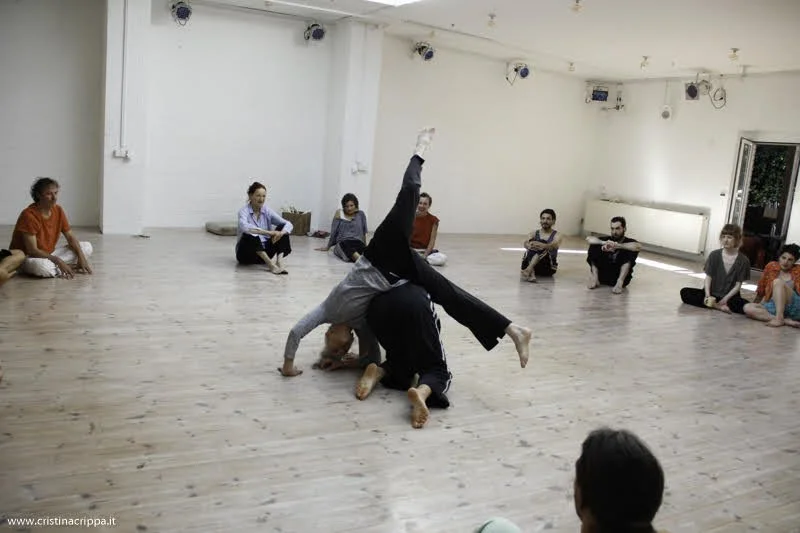
Flex between noticing all of your partners, and noticing at least one of your partners noticing you whether or not you are in physical contact. Please, do not rely on sight alone, but rather open the field of your touch sensing, interior and exterior to your flesh. Begin to ask yourself the question, how do I know they know I’m here? Notice what noticing feels like. Know what changes for you when they know you are there. Notice what you do to let your partner know you notice them. What does noticing as communication do?
Notice Noticing